
The days are getting longer and the weather is getting warmer, which means spring is here and so are the bats!
March heralds the beginning of spring and the stirring of bats. Slowly awakening from their winter hibernation, bats are beginning to emerge as the weather gets warmer. You may have even seen a couple foraging at dusk already. During this transitional period, bats may find themselves short of energy and become flightless or grounded, and are also at greater risk of predation, including cat attacks. It’s important that these bats are taken into safety and rehabilitated, ready for a successful release back into the wild.
Fiona Muir and Ellesse Janda, Senior Ecologist and Ecologist at EcoNorth respectively, are both volunteer bat carers for Northumberland and Durham Bat Groups. They’ve already had a busy start to the season and are here to share their experience and advice.
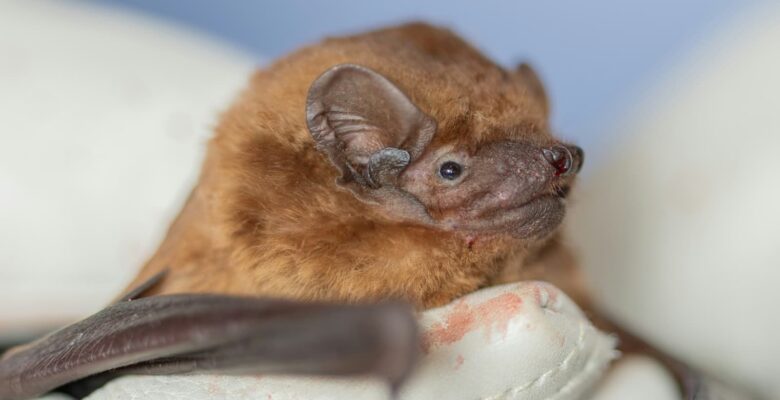
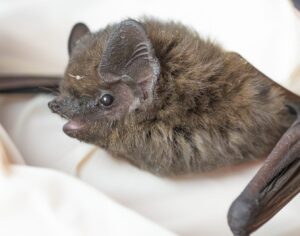
The first bat that came into care this year at EcoNorth HQ was a female Nathusius’ Pipistrelle at the beginning of March. The Nathusius is a migratory species, with few records of hibernation roosts recorded in the UK. This species is larger than the other pipistrelles, weighing between 6g and 16g with a wingspan of up to 250mm. They also have a slight upturned muzzle and a hairy tail membrane (or “fluffy butt”). This bat was rescued from what we believe was her hibernation roost in a residential loft near Benwell, Newcastle upon Tyne, which may be the first record in the area! After a week of tender loving care and many meal worms, the bat was released back at her roost location with the person who found her and her son present – a truly heartwarming experience!
Another bat which stole our hearts was Heinz – a male noctule who had been found injured near Wylam and was a species-first for both Fiona and Ellesse. Noctules are the UK’s largest bat species, weighing up to 40g with a wingspan of up to 400mm. Heinz, named due to his resemblance to a big bean, had several wing tears, a missing tooth and some nose bleeding. After a visit to the vet, five days of antibiotics and painkillers, and some expert help from Northumberland Bat Carer Group, Heinz was released back into the woodland with another audience of happy finders and children. Special thanks to Siobhan Bailey for her assistance with Heinz!
What to do if you find a grounded bat:
Bats may be flightless and be found grounded in lofts, houses and even outdoors. They may also be injured or have been involved in vehicle collisions. Bats are protected by law, but you’re allowed to handle them in order to assist them. Remember – there is a small risk of rabies from scratches or bites, so always wear suitable gloves to handle bats.
If you find a grounded bat, here are some steps to follow:
- Using gloves, carefully transfer the bat into a box with small air holes, lined with paper towels or tea towels and provide water in a shallow bottle cap. Remember, bats are small and can fit through gaps of 1cm, so it’s important to not make the air holes too big!
- Phone the National Bat Helpline on 0345 1300 228, who will give you advice and get in contact with a local rescue team.
- Alternatively, you can surrender the bat to your nearest veterinary practice, who will contact the rescue teams on your behalf. It’s important to tell the vets exactly where you found the bat and leave your contact details, as the rescue teams may need to speak with you.
- The bat will be passed over to a volunteer bat carer, who will care for and rehabilitate the bat until it is ready to be released. The carer may contact you to see if you wish to be present when the bat is released – we highly recommend doing so, as it is an unforgettable experience!
For more information for help when finding a bat, please visit the Bat Conservation Trust website (https://www.bats.org.uk/advice/help-ive-found-a-bat/bats-in-need-of-rescue/assess-the-situation).
If you’d like to learn more about bats in your area, consider becoming a member of your local bat group, such as Northumberland Bat Group (https://www.northumberlandbats.org.uk/home/) and Durham Bat Group (https://durhambats.org.uk/).